
Toned coins captivate collectors because they turn ordinary metal surfaces into vivid, naturally formed artwork. These color shifts are not applied by artists or mint designers—they appear slowly through chemistry, time, and environmental conditions.
For many numismatists, toning signals originality, untouched surfaces, and a long, stable storage history. As a result, beautifully toned coins are often priced higher by a coin identifier app than bright, untoned examples. Understanding how and why these colors form helps collectors appreciate their rarity and evaluate them confidently.
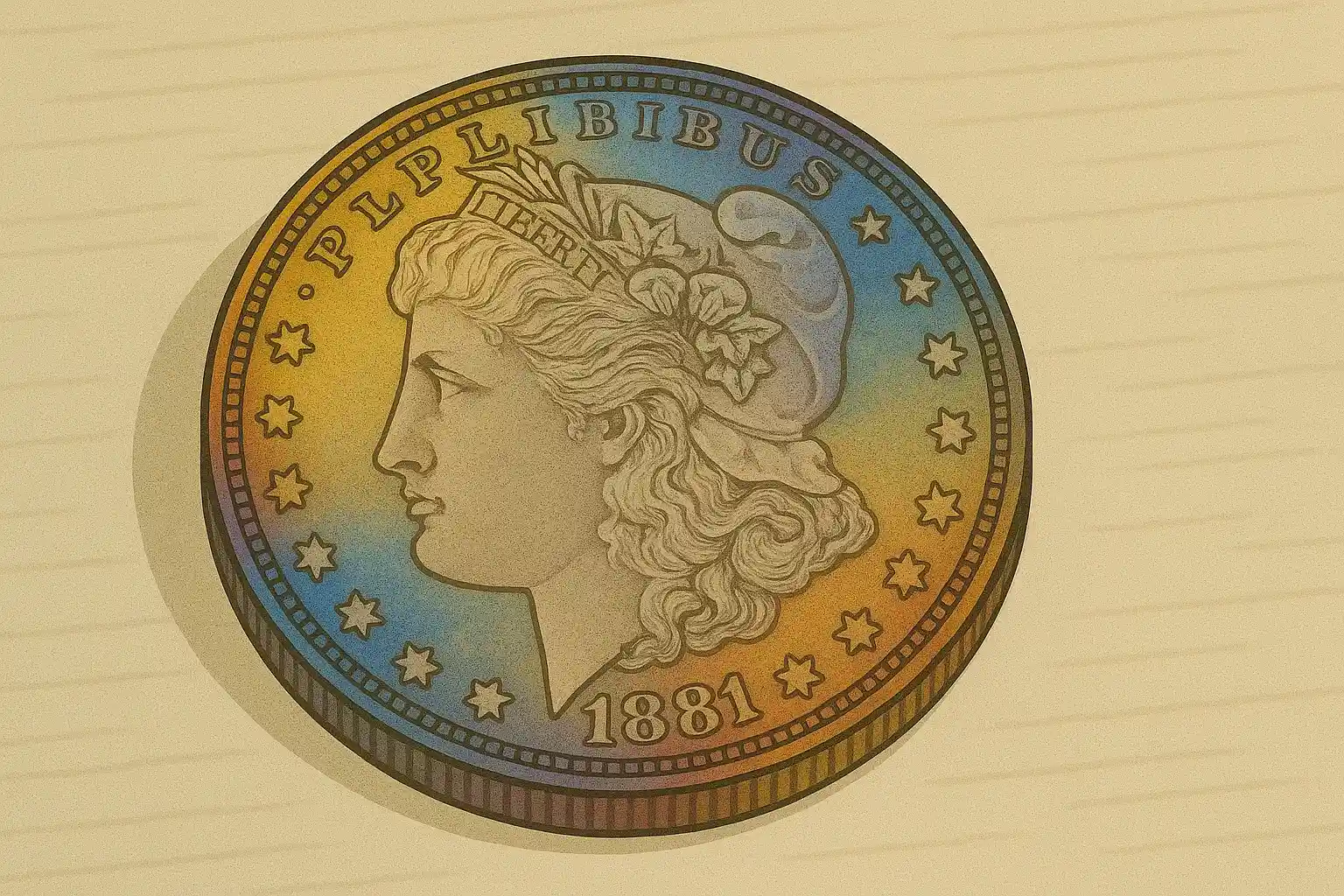
Causes of Natural Toning
Toning begins as a reaction between a coin’s metal and the surrounding environment. Silver is most reactive, which is why Morgan Dollars, Peace Dollars, and classic commemoratives often display dramatic rainbow patterns. The thin layer that forms on the surface interacts with light, creating a spectrum of colors that can shift depending on thickness and composition.
Natural toning occurs due to several environmental factors:
- Atmospheric sulfur: reacts quickly with silver, creating gold, blue, and purple tones.
- Oxygen and humidity: promote slow oxidation that deepens color over time.
- Album and holder materials: older cardboard holders contain sulfur, accelerating attractive peripheral rings.
- Temperature changes: influence the speed and direction of color progression.
- Storage duration: more time generally produces richer layers and smoother transitions.
Different metals tone differently. Silver develops vibrant multicolor patterns. Nickel tones much slower and usually appears as soft gold or grey shading. Gold rarely tones but may show subtle orange or rose highlights from alloy components.
How Storage Influences the Look of Toned Coins
Even small variations in the storage environment produce distinct visual effects. Coins left in envelopes may gain golden halos, while coins in albums often show crescent-shaped toning where the page partially covered the edge. Uncirculated coins with original luster react strongly, creating sharp color contrasts. Circulated coins, by contrast, usually tone more softly because of reduced surface reflectivity and existing wear.
Collectors often evaluate storage history by examining:
- color progression direction
- symmetry and consistency
- presence of natural luster breaks
- interaction between toned areas and high points
These indicators help distinguish natural toning from unnatural acceleration or chemical treatments. Early recognition of these patterns builds confidence when evaluating toned coins in auctions, at shows, or in private sales.
Natural vs. Artificial Toning
Once collectors understand how natural toning forms, the next essential skill is distinguishing it from artificial or chemically forced color. The market rewards originality, and grading services penalize anything that looks manipulated, so being able to recognize the differences protects both enjoyment and investment.
Natural toning develops slowly as a thin oxidation layer forms on the metal. This creates soft transitions between colors and maintains the underlying luster. Artificial toning, by contrast, often mimics the surface patterns but lacks the authenticity, age indicators, and metallic depth that specialists expect.
Key traits of natural toning include:
- Smooth transitions between color zones rather than abrupt shifts
- Visible mint luster shining through the toned surface
- Uniformity across high and low points without strange concentration in recesses
- Color progression that follows metal exposure, such as album toning rings
- Logical patterns caused by long-term storage conditions
Meanwhile, artificial toning usually displays warning signs:
- Overly intense or neon-like colors that appear unnatural
- Sharp color boundaries instead of blended hues
- Flat or dead surfaces lacking the shimmer of untouched metal
- Discoloration in protected recesses, where natural toning should be weakest
- Repetitive patterns from heat or chemical treatments
Collectors often compare toned examples to certified, known-authentic pieces to confirm that the hues and transitions align with natural aging. This visual cross-checking helps avoid coins that were enhanced to attract quick buyers.
Digital tools also support this evaluation. A photo scan through Coin ID Scanner for iPhone provides official specifications—year, composition, diameter, weight—making it easier to confirm a coin’s originality before focusing on toning. Seeing the correct metal profile helps you rule out suspicious alloys that sometimes accompany artificially altered surfaces.
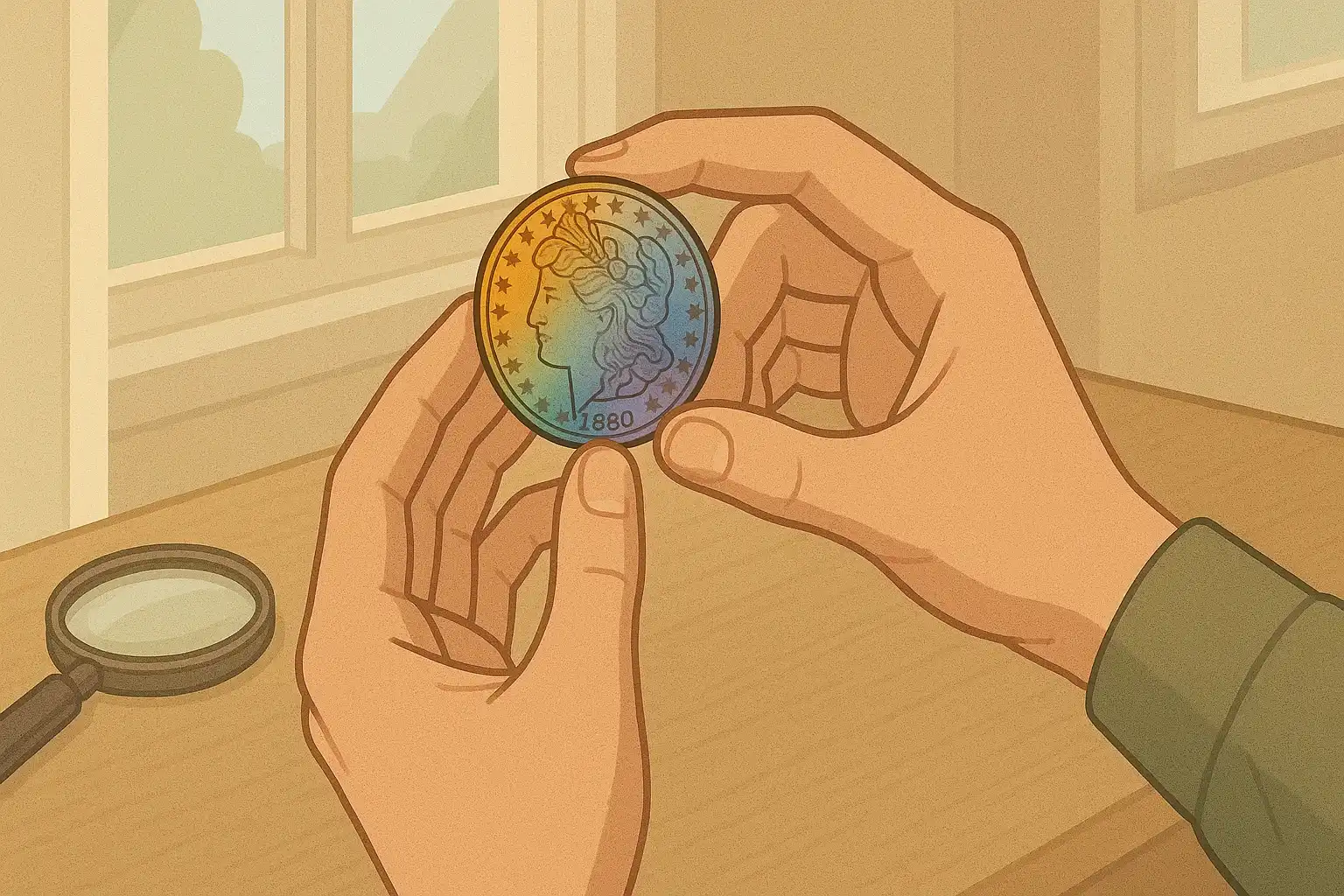
Why Collectors Cherish Toned Coins
Toning sits at the intersection of chemistry, art, and personal preference. Many collectors view it as the metal’s record of its environment, with each color shift reflecting years of storage history. When toning develops naturally and evenly, it enhances visual appeal and may push a coin into a higher premium category.
Collectors appreciate toned coins for several reasons:
- Eye appeal: Balanced, colorful toning increases desirability.
- Uniqueness: No two toned coins age in exactly the same pattern.
- Proof of originality: Natural toned surfaces often indicate untouched condition.
- Protection: The patina acts as a barrier against deeper corrosion.
- Auction performance: Rainbow-toned Morgans and other silver series routinely outperform blast-white examples.
Some of the strongest premiums appear on:
- Morgan dollars with crescent rainbows
- Barber half dollars with deep blue rims
- Early commemoratives with autumn-like gold and orange layers
- Silver eagles with vivid lavender and turquoise arcs
Because eye appeal plays such a large role in valuation, sellers highlight toning when it is attractive and original. Buyers, in turn, study photos carefully to determine whether the patina enhances the coin or masks problems.
Natural vs. Artificial Toning Characteristics
| Feature | Natural Toning | Artificial Toning |
| Color Transitions | Soft, gradual | Abrupt, unnatural |
| Luster | Visible underneath | Dull or muted |
| Pattern | Logical, storage-based | Random or repetitive |
| Color Intensity | Warm, metallic | Neon-like or extreme |
| Location of Color | Mostly exposed surfaces | Deep recesses or shadows |
| Market Reaction | Premium potential | Penalized by graders |
Preservation and Detection Tips
Once collectors understand how toning forms and why natural patterns command strong premiums, the next priority is preservation. Toned coins react easily to their environment, and small storage mistakes can dull, darken, or strip colors over time. Protecting surfaces requires stable conditions and consistent documentation.
A reliable preservation setup includes:
- inert holders such as Mylar 2x2s, archival flips, or airtight capsules
- low-humidity environments using silica gel or controlled storage boxes
- avoidance of sulfur sources, especially certain cardboard albums and rubber materials
- stable temperatures away from heat, sunlight, or attic/garage fluctuations
Handling practices matter as well. Touching toned surfaces with bare fingers leaves oils that accelerate uneven darkening. Cotton or nitrile gloves protect both the metal and the delicate color transitions that make each toned piece unique.
Documenting the progression of toning helps collectors track changes over months or years. Using neutral lighting and consistent angles captures accurate color representation, allowing you to spot any possible shifts caused by environment or storage. Many collectors create detailed digital logs with notes on color zone development, intensity, and possible risk areas.
Technology plays a role here, too. Tools such as Android Coin Value Checker support cataloging by providing verified minting years, composition, and pricing context. The app’s AI Coin Helper and smart filters assist in organizing toned acquisitions, helping collectors maintain clean digital records as the collection grows.
Professional Authentication and Market Confidence
Because toned coins can command high premiums—and because artificial toning attempts remain common—professional grading adds security. Services such as PCGS and NGC evaluate toning quality, originality, and market acceptability. Their certification slabs protect surfaces from environmental exposure while offering a recognized level of trust for future resale.
Investors and advanced collectors often submit:
- rainbow-toned Morgan Dollars
- vividly toned modern commemoratives
- high-grade silver halves and quarters
- coins with rare color patterns such as crescent rainbows or textile toning
Certification helps confirm natural development and protects the coin’s value against skepticism, especially in auction environments.
Natural vs. Artificial Toning Indicators
| Feature | Natural Toning | Artificial Toning |
| Color Flow | Smooth transitions, gradual layering | Abrupt or unnatural shifts |
| Luster | Underlying mint luster remains visible | Luster appears muted or removed |
| Location | Higher on exposed fields | Hidden in recesses or protected areas |
| Pattern | Organic shapes, soft rings or bands | Overly uniform or chemically forced |
| Reaction to Light | Multi-directional iridescence | Flat, inconsistent shine |
Toning remains one of the most visually captivating transformations in numismatics. It results from natural oxidation—slow, unpredictable, and unique to each coin. Collectors prize it because it reflects history untouched by cleaning or chemical alteration, and because vibrant toned coins combine rarity with undeniable eye appeal.
Protecting these pieces requires environmental control, thoughtful handling, and consistent documentation. Digital tools such as Coin ID Scanner support the process by helping verify minting information and manage a structured catalog of toned acquisitions. When combined with professional grading from PCGS or NGC, collectors can ensure the originality of their coins and preserve long-term value.
Toned coins are not just artifacts—they are natural artworks shaped by time, chemistry, and careful stewardship. Understanding how they form, how to distinguish natural from artificial toning, and how to preserve them allows collectors to enjoy some of the most beautiful and rewarding pieces the hobby has to offer.